Blog Feed

Implicit Entitlement

Give us courage to change what must be altered,
serenity to accept what cannot be helped,
and the insight to know the one from the other.

—Reinhold Niebuhr

The official statistics alone can feel overwhelming:  10.1 million Americans out of work by the end of last month, directly attributable to the pandemic, an unemployment level of 6.3%.  Yet as Federal Reserve Chair Jerome Powell recently pointed out, the actual situation is much grimmer, and it is worth revisiting his precise words:

Published unemployment rates during COVID have dramatically understated the deterioration in the labor market. Most importantly, the pandemic has led to the largest 12-month decline in labor force participation since at least 1948.  Fear of the virus and the disappearance of employment opportunities in the sectors most affected by it, such as restaurants, hotels, and entertainment venues, have led many to withdraw from the workforce. At the same time, virtual schooling has forced many parents to leave the work force to provide all-day care for their children. All told, nearly 5 million people say the pandemic prevented them from looking for work in January. In addition, the Bureau of Labor Statistics reports that many unemployed individuals have been misclassified as employed. Correcting this misclassification and counting those who have left the labor force since last February as unemployed would boost the unemployment rate to close to 10 percent in January.

I share all of this because at a recent all-school employee meeting, the Head of my school had to share the news that our school’s board had needed to make a tough decision.  As beneficiaries of the Paycheck Protection Program, the school as a small business had been able to cover significant amounts of the financial deficits encumbered since March of 2020 and projected through the 2021-2022 school year.  But the total amount of the PPP loan does not cover the full deficit for next year, and therefore, we were told that starting in August, the school’s contributions to the TIAA/CREF retirement funding would need to be paused to make up the difference in the school’s projected debt so that the school could remain a viable business—with an emphasis on “paused,” not permanently taken away.

Now, I need to put things in perspective before continuing.  The 7%-of-salary retirement contribution is on top of our salaries and independent of any contributions we might individually choose to make.  It is not a matching contribution; it is a salary perk which the majority of small businesses in this country—schools or otherwise—simply do not offer at all.  Therefore, what the board was effectively telling us is as follows:

  • that they were not going to mess with our health care (which I know from being unemployed for the duration of my sabbatical costs nearly $9,000 annually for an individual, let alone a family!). 
  • that the faculty tuition remission for faculty children would remain in effect. 
  • that they were even going to be able to offer a small raise of 2% after freezing salaries the past two years. 
  • AND—perhaps most importantly of all—that they were going to be able to keep every single one of us employed for at least another year. 
  • All for the cost of losing this retirement contribution for a year.

Well, you would have sworn that my Head of School had just announced that we were each being asked to donate a kidney! I have seldom witnessed so many in a group get so upset so fast! And while on the one hand, I could empathize how difficult it was to hear this news after how much ridiculously harder we have all had to work as educators this year; on the other hand, knowing the impact of the pandemic on unemployment in general, I couldn’t help wondering:  you all do understand that this means we get to keep our jobs, right?? That unlike two other area private schools, IND and Wilkes, we are not being forced to close our doors forever and lay off an entire community of educators and staff?? That we get to remain getting paid to do what we love and enjoy doing—something most workers in most jobs only fantasize about??

Granted, I was (and am) coming at the entire situation from what was probably a very different perspective.  When I “retired” from my former school in response to the moral bankruptcy and general incompetency of the new administration that I was witnessing and could no longer support, I knew full well the risk I was taking.  A year-long sabbatical from the classroom without a guaranteed job waiting for me meant that I might not teach again.  At 57, someone with even my credentials is no longer as attractive a candidate for a position, and so I have simply been deeply grateful to be employed once more as an educator.  Toss in the realities of the existing job market, and I am just grateful to be employed, period!

But this personal situation made the disconnect I was witnessing feel all the stranger.  How could the awareness so many of my colleagues have expressed about the economic realities for so many in this country right now not lead to an understanding that those same realities could apply to them, too?  Which got me to wondering what the source of this disconnect might be.  No one is escaping unscathed from the current situation any more than a person can escape from the inevitable eventuality of death, and yet somehow, many of those present were behaving as if this decision by the school shouldn’t be happening to them.

Certainly, a rather large percentage of our faculty are closer to the ends of their careers than their beginnings, and the loss of the extra savings for the year will not be without consequence—myself included! But I couldn’t shake the sense that at least some of the voices I was hearing were basically saying that they were owed a certain level of economic security and that this was unfair.  There seemed to be a subtle almost unconscious sense of entitlement at work in the situation, and that caused me to ask:  like hidden biases, are their implicit entitlements? And if so, where did this particular implicit entitlement come from?

Notions of entitlement, of course, are baked into our cultural DNA.  Thomas Jefferson stated the sentiments of his fellow peers quite succinctly when he wrote: “We hold these truths to be self-evident, that all men are created equal, that they are endowed by their Creator with certain unalienable Rights, that among these are Life, Liberty and the pursuit of Happiness.”  Hence, from our very founding, we have felt we were inherently owed something just by our very existence; something we didn’t have to earn.

However, it is critically important to remember that Jefferson and the other Enlightenment thinkers who informed him understood these words quite differently than they are often represented today.  “Endowed” for them meant “possesses rationality,” and thus, what made certain rights unalienable was the human ability to think logically and wisely about the conditions for a fair and just society.  “Life, Liberty, and the pursuit of Happiness” were not understood by the Founders as something the universe itself somehow owed individuals; they were understood as political entitlements that a rational government would protect.

Take just the first one, for example:  Life.  Jefferson, Madison, Franklin, and the others did not believe that the universe owed individuals the right to exist in the first place.  What they believed is that properly structured government owes a person who happens to be alive protection from harm to that life.  Rights and other political entitlements were about the abridgement of power, not the proactive use of it, and indeed, the Bill of Rights in the U.S. Constitution is basically a long list of abridgements of power, areas of life in which you are entitled to have the government not interfere.

Recognizing that this is how the start of our society understood the notion of entitlement is important because along the journey from then to now, we started as a society understanding entitlements as things we were actively owed.  For instance, the idea that children have the right to an education is a common and non-controversial one in today’s world.  But this right is not understood as “the government should abridge its power and not interfere with how children are educated;” it is understood as “the government owes every child an education” (but with the caveat that that is only to a certain level!).  We even have governmental programs today that are openly referred to as “entitlement programs” such as Social Security and Medicare because the ideas informing their creation was that people have the right to a minimal level of support and care in their old age.

However, this change in our understanding of entitlement has come at a cost that is not merely the literal ones paid for by our taxes, and of the many things the pandemic has revealed, it is this other cost that I would argue may be the most dangerous to our long-term survival as a society.  I have discussed at length already how our history of individualism and the deliberate designs of modern digital technology have contributed to the rise in the amount of narcissistic behavior in our country.  But I want to argue here that this rise in narcissism combined with the way we understand rights today has led to an implicit entitlement that operates in too many of our lives: that the world should work the way I want it to work, whenever I want it to do so. 

Somehow, those of us with privilege (and to a lesser extent even those without) have developed this hidden notion that there simply shouldn’t ever be any inconvenience in our lives and that when there is, we are owed rectification of the situation immediately.  We even get angry when inconvenience happens—as if the universe has somehow violated its contract with us.  It is what happened with my colleagues upset by the school’s decision; their long-term economic plans were going to be inconvenienced and “that just wasn’t fair.”  It is what is happening with the vaccine rollout in this country.  The laws of physics and chemistry put limits on how fast anything can be manufactured, but that’s inconvenient; we want things fixed now.  So the anger and resentment grows.

Moreover, before I am accused of polishing my halo, I am in no way immune to this implicit entitlement at work in our collective brains; no one is.  Just because this particular inconvenience was outweighed for me by the gratitude of being employed does not mean I have not had my own moments of road rage at a car I thought was going too slow when I was in a hurry or exploded at the discovery of a dripping faucet “because I just don’t have time to deal with this right now!”  Like hidden bias, today’s implicit entitlement is buried deep in our unconscious, and like such bias, it will only be by deliberately unpacking this entitlement that we will be able to resist it.

And resist it we must! As I said, the pandemic has revealed the true cost of believing that the world owes someone the inconvenience free life he, she, or they want.  Don’t like masks? Damn if I’ll wear one! Don’t like social distancing? I’ll party with whoever and how many I want! Don’t like the scientific truths about the virus and its spread? I’m entitled to listen to whatever falsehoods I wish! Don’t like the results of a fairly held and fairly counted election?….

You get the picture.  We will likely pass 600,000 dead in this country before the pandemic stage of this disease is over—a greater percentage of our population than any other country in the word!—and an entire generation of children will bear the economic cost of a lost school year for the rest of their lives.  We had to wreck our economy because to a degree, we could not trust people to work for the common good by deliberately inconveniencing themselves, and what few people seem to grasp is that the vaccine does not fix any of this; it only makes it so that the number of lives it “inconveniences” is limited to where our society can generally function again.

Yet, what the pandemic has revealed is also the opportunity to change, and if ever there was a time for Niebuhr’s famous prayer, it is now.  Now is our chance to develop resilience and empathy for the reality that life is messy and what little control we do have is illusionary at best.  It is the time to develop acceptance of our limits and the grace to acknowledge the limits of others.  It is our moment to tear down our inequities and rebuild a country where “with justice for all” truly is for all.  And most importantly, it is our reminder to care genuinely for the Other and not just the fellow members of our tribe. 

Our very lives depend on it.

References

Bowie, L.; Wood, P.; & Oyefusi, D. (May 5, 2020) Maryland’s Oldest Catholic Girls School, Institute of Notre Dame Announces Closing.  The Baltimore Sun.  https://www.baltimoresun.com/education/bs-md-institute-notre-dame-closing-20200505-iviuyq5k5zfo5ke3zqytgv3o4u-story.html.

Bureau of Labor Statistics (Feb. 5, 2021) U.S. Department of Labor.  https://www.bls.gov/news.release/pdf/empsit.pdf.

Jefferson, T. (1776) Declaration of Independence: A Transcription.  National Archives.  https://www.archives.gov/founding-docs/declaration-transcript.

Kaplan, D. (June 22, 2020) Wilkes School, a Casualty of Pandemic, Will be Missed. The Baltimore Sun.  https://www.baltimoresun.com/opinion/readers-respond/bs-ed-rr-wilkes-school-letter-20200622-2mfbx2hmqzel5i4nglwxef4r6u-story.html.

Keohane, N. (1980) Philosophy and the State in France: The Renaissance to the Enlightenment. Princeton: Princeton University Press.

Locke, J. (1980) Second Treatise of Government; ed. by C. B. Macpherson. Indianapolis:  Hackett Publishing Company.

Powell, J. (Feb. 10, 2021) Getting Back to a Strong Labor Market. Board of Governors of the Federal Reserve System. https://www.federalreserve.gov/newsevents/speech/powell20210210a.htm.

Richter, M. (1977) The Political Theory of Montesquieu. New York: Cambridge University Press.
Slipping Through the Cracks

A good friend of mine happens to socialize with a number of families who have school aged children, and ever since the pandemic caused the swing to virtual learning, she has followed the fate of one child in particular with ever mounting concern about her academic progress.  There is a closer personal relationship with the family (her own now grown daughter babysat this neighbor’s child for years), and what has concerned my friend is the apparent lack of parental supervision around schooling and the consequences of that for their young teenage daughter, who is floundering on-line and failing every single one of her classes by a significant margin.

The reason I know all of this is because there was a recent confrontation between the adults involved in this situation that led to the recognition that the child in question basically has reached middle school and cannot read—a state of affairs that a lot of denial has enabled—and my friend was reaching out to me, as an educator, both to share how aghast she was that no one had been willing to acknowledge “the elephant in the living room” and to ask me how could educational systems have failed this child so badly.  “Aren’t there laws about such things?” She queried.

To which I had to reply, “yes, but…” and then I decided that the “but” needed some airing.  So for those of you not in education, here comes some proverbial “dirty laundry.”  Let’s start with the basics, both the Federal Individuals with Disabilities Education and Improvement Act as well as Maryland state law “require that all students with disabilities be provided a ‘free, appropriate public education’ [from birth to age 21] that helps them learn and prepares them for employment and daily living” (Maryland Department of Disabilities).  However, having a law on the books and having the resources to meet demand are two different things entirely, and what most non-educators don’t know is just how enormous the demand actually is. 

The statistics are sobering. One in five students in this country (20%) has a language-based learning challenge, regardless of socio-economic status or ethnicity, and of those 20%, 70-80% of them are likely to have dyslexia that would require significant educational intervention.  Indeed, 85% of children in public schools who have managed to get an Individualized Education Program (IEP) for reading difficulty are dyslexic, and 30% of all dyslexic children (diagnosed or not) suffer from ADHD on top of having difficulty with a task that requires restrained, quiet, focusing.

That is a LOT of need, and the simple truth is that almost no public-school system in this country has the resources to meet it adequately.  The law may say that every child is eligible for the psychological testing to determine if an IEP is appropriate, but unless there is an insistent and persistent parent who practically has to threaten to sue, no school district is going to volunteer the service because they simply do not have the money to cover the level of need that would be revealed without having to take funding from other programs—which would set off a different set of parents howling!

 Instead, as I suspect happened with my friend’s neighbor’s daughter, because she was well-behaved and tackled the tasks asked of her with effort and determination, enough good quality work was produced from verbal interactions for her teachers over the years to justify giving her grades that wouldn’t cause a parent to go pester the school psychologist, and the system simply moved her on up the grade levels.  In addition, as I have witnessed too often with parents of a certain socio-economic status, there was likely some denial that there was a problem because “we aren’t the kind of people who have a child with a special need!” Combine all of this together, and you have the perfect conditions for a child with a reading challenge getting all the way to 8th grade before a pandemic uncovers the problem—because it forced nearly all learning to take place through words on a screen.

I should be clear that this habit of passing children along is not confined to public schools.  It happens regularly in private and parochial schools as well, and sometimes for far more mercenary reasons.  Tuition dollars can be hard to come by, and when there are schools that specialize in educating children with brains that work differently, there can be a lot of rationalizing about an individual student’s academic performance in those schools that do not.  My experience is that it happens less often in the independent school world because those same extra resources are regularly brought to bear in support of students with extra needs.  But social promotion is as much a part of the reality of these schools as it is of the public realm.

Which is part of what my friend finds so distressing about the young teenager who started this whole conversation:  this child has not only effectively lost this entire year of learning; she wasn’t really ready for this year of learning in the first place! Nor is she remotely alone in that fact.  Individuals with reading challenges are so prevalent in U.S. society and so underdiagnosed and undertreated that 5% of all adults are non-literate and approximately 25% of those who can read can only do so at the lowest levels.  That’s a third of adults in this country who are, at best, effectively semi-literate—all while struggling to survive in an information economy.

And of course that third is disproportionately represented by people of color.  In my efforts to help educate about White privilege, I’ve already written extensively throughout my posts about this pandemic’s learning costs and particularly those costs for BIPOC children (see the LaC Updates page).  But here is yet another example of the entrenchment of systemic racism in our society.  Dyslexia and other reading challenges truly are colorblind, affecting the exact same proportion of Black children as White.  Yet as my friend freely acknowledges, the child she is concerned about comes from enough economic and cultural privilege that the consequences of this child’s learning loss will not be as great as those for a person of color.  What’s more, if you think the White student with unmet special needs has an uphill climb to get acknowledged in a relatively wealthy school district such as Baltimore County’s, you can imagine what that battle looks like for a Black student in less affluent Baltimore City.

The bottom line is that COVID-19 has revealed yet another dysfunction of our educational system and the inequities that go with it.  Yet as epidemiologist and Baltimore City School Board commissioner, Durryle Brooks points out (and I’m paraphrasing):  the learning loss from this pandemic was already a core and foundational issue for the last 30 years, with Black students entering school 2-3 grade levels behind where they should be each year, and the notion that the past 9 months of learning loss is somehow more significant feels “anemic” (Katz & Harvie).  He points out that City teachers have known for years how to remediate learning gaps of all kinds, and that growing up as a Black child in South Baltimore, he was himself the beneficiary of these extra efforts.  Tutoring programs (such as the OASIS one my mother participates in) and other one-on-one learning situations have the power to shrink the performance gap; it simply boils down, he argues, to making the commitment to providing the necessary resources.

Ah! But there, the notion of “pie” and how many pieces there are rears its ugly head once more.  Since the Reagan Revolution, we have steadily and systematically concentrated more and more of our wealth into fewer and fewer hands.  There is a finite amount of resources (no matter how appealing the capitalist myth of perpetual growth is), and it is indeed a cliched truism that “you get what you pay for.”

So once again, I conclude with a question I have already asked many times in this project: what are we prepared to pay for the futures of all of our children? And what’s the cost if we do not?

References

Kast, Sheilah & Harvie, M. (Feb. 11, 2021) Opposition to Baltimore City Schools’ Return Plan.  On the Record. https://www.wypr.org/post/opposition-baltimore-city-schools-return-plan.

Maryland Department of Disabilities.  http://mdod.maryland.gov/education/Pages/Special-Education-Servcies.aspx.

National Center for Education Statistics (2021) https://nces.ed.gov/.

Society for Neuroscience (2004) Brain Research Success Stories. www.sfn.org.

State of Maryland (2020) Maryland Commission on Innovation & Excellence in Education. http://dls.maryland.gov/pubs/prod/NoPblTabMtg/CmsnInnovEduc/2019-Interim-Report-of-the-Commission.pdf#page=11.

Further Notes from the Trenches

As with almost anything in life, until we have lived an experience, we are not capable of truly understanding it (it is why I have written so often in this project about the need to learn by doing).  But while I have written frequently about the digital divide during this pandemic and its impact on education, I have done so primarily from an theoretical perspective:  I have access to the available data, know how to analyze and interpret it, and have the intellectual training to extrapolate the consequences of it for teaching and learning. 

Admittedly, I have had numerous glimpses throughout this school year of how inadequate access to the on-line realm can affect the quality of someone’s learning as I have watched the same children dropped from my class time and again or waited patiently for the screen to unfreeze so that a student and I could speak once more.  But those of been moments of mere inconvenience, and I have not possessed the deeper knowledge that comes from lived experience.

All that changed this past week.  The internet access has been a little wonky at my current school all year (hence the glimpses), but Friday morning, it went full-scale meltdown while I was attempting to teach some statistics to my seniors.  It was a fully virtual day with that class in our hybrid schedule, and I had just finished presenting the three equations we would be practicing that period and was trying to set up the breakout rooms for my students to work in when, quite abruptly, my zoom link simply stopped working. 

Initially unconcerned, I sought to reactivate it, only to have the infamous spinning symbol twirl away on my screen for nearly five minutes.  Then, when the on-line connection finally did take hold once more, I was met by a chorus of voices frantically asking questions about what they did not understand—which lasted all of 30 seconds before my zoom linked dropped me yet again.

I will spare readers the full account, but needless to say, after getting dropped six times in 30 minutes, with each reconnect leading to ever more mounting frustration from my students—some of who were now trapped in breakout rooms I couldn’t access—my lesson for the day was effectively shredded.  With 15 minutes to go, I finally accepted defeat and e-mailed them an alternative activity we would have eventually done that was decidedly low-tech and simply trusted them to use the time productively to start to construct their pedigree charts for the following week.

As I sat afterward in the silence of my classroom, I have seldom felt such anger and discouragement.  I was already struggling, as I have all year, with the gut-punching knowledge that I have been forced to use a venue that prevents me from engaging in what I know is essential to good teaching.  But in my heart and mind, I knew I was at least trying to educate as effectively as the innate limits of a virtual classroom allows, and here, even that had been taken from me. 

To make matters worse, the pleas for attention from the students in the brief moments of contact left me realizing that children had needed me, and I had failed to be there for them.  It did not matter that rationally I knew the fault was not mine; emotionally, I had failed them as their teacher, and so furious was the intensity of my feelings at that moment that I almost crushed the coffee travel mug in my hand.  It felt like I had betrayed everything I have ever practiced or preached as an educator, and as I later shared with a colleague, I had to actively resist the urge to walk out the door, never to return.

Now I suspect that many who read all of this are going to raise an eyebrow or two thinking “Uh, weren’t you over-reacting just a little?” After all, it was only one lesson in an entire year of lessons, and heaven knows, it was certainly not the first—or even remotely the worst—botched teaching moment in a career of 30+ years.  So wherefore the intensity of the response?

The answer, I think, lies in the psycho-emotional cost it takes to be in any human services field right now.  Those of us on the front lines of actively caring for our society at this exact moment in time have to bring all the usual energy it takes to attend to the emotional, physical, and mental needs of others, and then on top of that, we have to bring the energy needed to believe and act as if what we are doing right now to serve others is actually having a positive impact in their lives in the face of a pandemic that every day seems to suggest otherwise.  It is why I empathize so deeply with those in the medical field:  they are having to bring this energy to believe they are making a difference each day only to watch it regularly fail to do so as yet another patient under their care dies of COVID.  My Friday class was my metaphorical patient, and I just didn’t have any energy left to cope with its “death.”

But as I processed my reactions to my failed lesson, I realized that I had gained some valuable and potent insight and empathy into how the digital divide in education is impacting those currently enduring it.  It takes an enormous amount of energy for all children everywhere right now to get up each day, log on to a screen, and act as if what they are doing matters.  They have none of the usual energizing rewards that come from in-person interactions, and even whatever activities they are doing on a given day are, at best, the mere manipulation of a bunch of electrons.  When I dive within to recall my own 6-to-18-year-old selves and how this situation would feel to them, “this sucks!” is the polite version of what emerges; so I know how difficult it must be right now for any student to show up for a zoomed class (heck, I know how hard it is for me, and I have to behave as if I’m happy and eager to be there!).

Hence, as I place myself in my students’ collective shoes, I then take how Friday’s class felt and now place myself in the shoes of the students for whom their internet connection is a feeble public wi-fi hotspot which they access out of the passenger seat of a car in the parking lot outside their closed school or county library.  I recall how frustrated and anxious I was for only one lesson and think how it must feel to experience that for every single class, all day long, every single school day, never knowing what is being missed as the zoom link disconnects and reconnects over and over again. 

Talk about enduring a Sisyphean task! The wonder isn’t that we have children whom teachers have not seen in their virtual classes for weeks on end; the wonder is that children who live under these conditions keep showing up at all.  I already had tremendous respect for my student, “John,” who is dropped from my zoom at least once every virtual class period (with an average I have calculated at three per hour).  But now that I have a deeper awareness of how that must feel for him, I want to build a pedestal and mount a statue of him for all to marvel at his fortitude!

I also want to not have to keep grading him.  That has been the other insight which my more direct encounter with the digital divide has produced.  My regular readers already know my thoughts about grading and how much I agree with Sheldon Eakins, that “if we’re grading right now, we’re grading privilege” (Newhouse).  But I had to submit a semester grade for “John,” as well as all my other students this past week, and while I own that grading is a required part of my job description, I have seldom felt more discomfited by it than I have this current academic year.  Friday’s class only reinforced those feelings as my own failure to transmit some essential skills for understanding biological inheritance caused me to see that failure from the other side.  How can I hold any student accountable for mastering a body of knowledge when I recognize that, courtesy of faulty digital access, they may never have received the transmission of that knowledge in the first place?

Yet students at the University of Maryland, College Park, report this past fall being pressured to avoid the available pass-fail option for their on-line courses—in spite of an overall drop in the level of student performance—because of the potential profile it could present for future graduate school and career options.  And it has been the surge in failing grades among K-12 students here in Maryland that has caused public protests by parents to demand the re-opening of schools for in-person learning.  All without anyone seeming to question whether it might be inequities in the virtual learning platform and not the virtual learning itself that might be the source of the problem at all levels of education.

Granted, the virtual platform simply is an inferior educational tool, and as I wrote in my most recent post, the costs of having to employ it during this pandemic are going to be enormous.  But for those on the wrong side of the digital divide, those costs are going to be even worse, and just how much worse is a new, deeper insight I now take as an educator moving forward.  Somehow, I need to work to find better ways to bridge it; I owe it to all my “John’s.”

References

Newhouse, K. (May 11, 2020). Why Grading Policies for Equity Matter More Than Ever. Mindshift. https://www.kqed.org/mindshift/55889/why-grading-policies-for-equity-matter-more-than-ever?fbclid=IwAR2Wz2sXs_xdS0rLh9Oxhrgrfx0NP5oHjSfz6Z4SSK7dY2e3zz248-L9ilM.

University of Maryland (Nov. 20, 2020) Fall 2020 Student Experience Survey: Undergraduate Student Initial Results. https://svp.umd.edu/sites/default/files/inline-files/Fall%202020%20Student%20Survey%20-%20undergraduates%20-%20initial%20results%20-%20Nov%202020.pdf.

Wood, P.; Stole, B; & Bowie, L. (Jan. 22, 2021) Maryland Gov. Hogan Calls on Schools to Bring Students Back to Classrooms by March Under Hybrid Learning Plan.  The Baltimore Sun. https://www.baltimoresun.com/coronavirus/bs-md-hogan-salmon-covid-schools-update-20210121-5r74ewa7nnfg7bq4hjsdrwcfju-story.html

The Tally So Far

When we are certain that the human soul
is no longer at work in the world,
it’s time to make sure that ours
is visible to someone, somewhere.

—Parker Palmer

So much of our work is an act of faith.
—Michael Harris

We have met the enemy, and he is us.
—Pogo

While recently exploring the influence of digital technologies as a dominant environment currently sculpting our brains and behavior, it occurred to me that the pandemic itself has now been with us long enough for it, too, to have become a dominant environment starting to sculpt our brains and behavior. That, in turn, caused me to recall that back in mid-April, when this on-going natural disaster was relatively new, I wrote a post in response to some observations a friend had made about the abrupt switch to virtual learning in which I shared some initial thoughts about the potential ultimate costs of the pandemic for education.  All of which got me to wondering: now that we are 10 months into this pandemic, what actual long-term costs for teaching and learning have started to reveal themselves more fully?

In Notes from the Trenches and More Notes from the Trenches, I have already written about the costs I have seen firsthand as I returned to the classroom this fall after my sabbatical last year.  But some recent statistics I came across in my research has provided a “35,000 foot” view of the pandemic’s impact on the future of education in this country, and the view is not pretty.  First, it is estimated that the crash-like swing to virtual learning this past spring set student learning back anywhere from 1 to 5 months, depending on where you lived and the color of your skin.  Second, with this set-back already in place, researchers estimate that the reading skills gained during the present virtual school year will only be 63-68% of those of previous years, and the situation in math is even more dire, with an estimate that the math skills gained will be as little as 37-50% of those of previous years.  A grim picture indeed!

But the final recent statistic that caught my attention the most is the loss of 4.5 million childcare slots in this country. The reason this one struck me so deeply is because of its implications for the brain development of an entire generation of children experiencing the pandemic right now, and to understand what they are, I am going to need first to provide a short primer on the topic (for those who would like a deeper dive, see Chapter 8). 

To start, between birth and about age 5, the growing brain adds neurons and synaptic connections in its different parts in response to the environment it inhabits; the richer and more varied the environment, the more neurons and synaptic connections created and the better all the different parts of the brain will function.  It is why Head Start programs are so important for enriching the learning environments for children whose socio-economic status put them at a disadvantage and why high-quality day-care makes such a difference in long-term learning outcomes.  It is also why if you stress a particular skill during this time period, the brain will create the extra neurons and neural connections to support it; Olympic level gymnasts and figure skaters do not get started in their teens for this very reason.

Next, between roughly age 5 and ages 10-12, the brain takes the neural connections it now has from stage 1 and reinforces them, adding additional synaptic contact points to increase processing speed. It does so, again, in direct correlation and response to the environment it inhabits, and again, the richer and more varied the environment, the more of the brain’s many neural networks it reinforces.  It is why wealthier public schools make sure their elementary schools maintain their music, arts, and P.E. programs and why those wealthy enough to do so will pay the tuition dollars for the extra attention—as well as extra programs—provided in an independent lower school.  It is also why, again, stress a particular function of the brain over others and that’s the part that gets reinforced to work the fastest.

Finally (but not really; it’s just that changes after this stage are much slower and smaller), between ages 10-12 and 22-25, the brain takes everything it has constructed so far and starts systematically and permanently to prune any connections which its environment tells it are not important, dismantling some of them completely.  It is why, yet again, the richer and more varied the environment the brain encounters during these years, the less pruning that will take place, and it is, quite frankly, the biological justification for the liberal arts.  It is also why if you spend all your free time as a teenager on your smartphone texting and watching videos, your other communication skills start to suffer: your brain is literally pruning your ability to employ them.

Now, for purposes of the current discussion, what is critically important to understand about this whole process is that it is linear, unidirectional, and genetically hard-wired.  Once a child moves from the first stage to the second, no new neurons and new connections get made (except for memory centers; see Chapter 3).  Once the transition from stage two to stage three occurs, there is no more reinforcement to speed things up, and once the final transition to full adulthood occurs, there is no un-pruning.  There will be minor changes as you age, but the basic architecture of the brain is cemented in place for life by age 25.

Returning, then, to the loss of 4.5 million childcare slots (as well as the estimated losses in reading and math skills), and I suspect many readers can already see where this is going.  In a growing child, tween, or teen, a year for the brain is an enormous length of time, and what the brain fails to experience during that time leaves a permanent mark.  The 3-year old who is not learning how to work and play with others right now because daycare is closed is not growing the extra neurons in that part of his, her, or their brain.  The 8-year old who is not gaining certain reading and math skills due to the limits of virtual learning is not reinforcing those connections in the brain.  And the teenage athlete who is not getting to play as a result of COVID restrictions has a brain starting to prune the synapses associated with the specific skillset associated with his, her, or their game.

Furthermore, what the brain does experience likewise leaves its immutable mark.  As Matthew Biel, chief of the child and adolescent psychiatry division at Georgetown University School of Medicine, puts it:

The strain on kids [right now] is enormous.  Your 7-year-old wants to be recognized when they raise their hand. Oftentimes doesn’t happen on Zoom. They want to be able to make a comment, make a joke with a peer — can’t do that, no chatting allowed. Wants to be able to get up and walk around the classroom and move — can’t do that, we need to see your face on screen (Natanson & Meckler).

As a result, children of all ages “are suffering emotionally, mentally, and even physically from so many hours, often alone, in front of a computer screen (Natanson & Meckler).  All of which is impacting, depending on one’s age, either neuron growth or reinforcement or pruning in the parts of the brain responsible for these pandemic experiences.  There is a reason that PTSD is so challenging to treat.

However, I do not want to overstate what is happening either.  That theoretical 3-year old mentioned earlier still has neurons in the parts of the brain for working and playing with others; that’s part of the brain’s built in plasticity I wrote about in my last two posts.  It is simply that by being deprived of the environment that would increase the neurons and connections in those parts of the brain, said child is going to find working and playing with others more challenging and that challenge is going to last a lifetime because he, she, or they can’t get that developmental time back. Those extra neurons from that year are never going to appear.  Again, a generation of children are not losing their brain’s ability to function, but the pandemic is introducing hinderances and limitations to those functions that will last a lifetime.

And the impact on BIPOC children is going to be even worse.  Part of what makes racism in this country a systemic problem is because of the very brain development process I just described.  The majority of BIPOC children during their first 5 years live in environments that are not rich and varied, and they then attend underfunded schools that likewise do not provide rich and varied experiences.  The consequence is fewer new neurons, less reinforcement, and more pruning, resulting in levels of educational achievement that limits the level of employment opportunities such that, too often, as adults they find themselves living and raising families in the same impoverished environments that produced them in the first place, creating a self-perpetuating, self-reinforcing cycle (i.e. systemic racism). 

In the current situation, though, this cycle has been made all the worse by the pandemic’s exacerbation of the digital divide’s impact on education.  In my original post on this topic, COVID-19 and the Digital Divide, the figure I had available to me from the most recent research I could find at the time (2017) was that there are 18 million households without internet access in this country—the vast majority of them home to those who would identify as BIPOC.  But in February of 2020, BroadbandNow estimated that that figure is closer to 42 million, and while some have argued that it is more of an infrastructure issue than anything else, in New York City—where broadband/wi-fi infrastructure is not an issue—nearly 1 million people (an 1/8th of the population!) has no access simply because they cannot afford it. 

The bottom line is that the digital divide is real, and I strongly suspect that it is a major reason why that setback in reading skills from the spring which I mentioned earlier show a clear delineation.  For white children, the setback was 1-3 months; for black children, it was 3-5.  Hence, the bitter irony right now is that at a time of social awakening in this country, the impact of the pandemic on education is actually reinforcing the systemic racism our educational system already contributes to in the first place.

Nor does the bad news stop there.  It is not just K-12 where COVID-19 is setting the stage for long-term negative consequences for education.  Distaste and disaffection with on-line learning has driven undergraduate enrollments down by 3.6% overall and a full 10% at community colleges (often the gateway for first time members of less affluent families).  Given that all the research and statistics show that for each year past high school an individual does not enroll in college, the less likely it is for a person to earn an eventual degree, and we find ourselves in a situation where, as Doug Shapiro of the National Student Clearinghouse puts it, we will have “an entire generation that will enter adulthood with lower-education, lower skills, less employability, and ultimately lower productivity” (Nadworny).

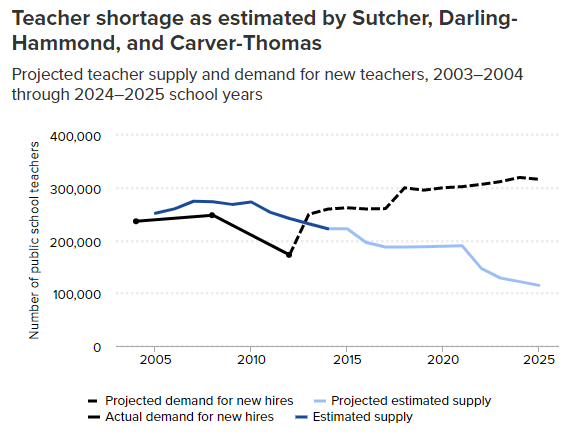
And to pour gasoline onto all this fire, there may be no help to remediate the pandemic’s damage to the learning part of the educational process because there may be no one available to do the teaching part.  As Natasha Singer of the New York Times puts it, “a pandemic teacher exodus is not hypothetical,” and the statistics are sobering.  Applications for early retirement in public schools are up 30% in the state of Minnesota, up 60% in Pennsylvania, and in Indiana, a staggering 72% of the state’s schools report significant staffing problems due to abrupt changes in teachers’ retirement plans.  Moreover, it’s not just the 30-year+ veterans walking out the door.  The National Education Association says that 28% of all its members report being more likely to leave the profession now, including 20% of those who have taught 10 years or less.  Shea Martin summarizes the situation well when she says, “if we keep this up, you’re going to lose an entire generation of not only students but also teachers” (Singer).

But do we have to “keep this up?” Granted, the tally of the cost of the pandemic to education is already a grim one.  However, as I reminded the class of 2020 in my letter to them, out of ashes is the chance to build a phoenix, and right now is the time when we need to be constructing our plans for how we will rebuild education in this country moving forward….

Coda  

It was January 3 when I started writing the preceding paragraph and took a pause to allow this essay to ferment in my mind for a while before finishing to post it.  Like anyone with half-a-brain, I compose off-line before copying and pasting (since once on-line, it is forever), and I like to feel confident that I am presenting my most genuine self when sharing my thoughts with others.  In the meantime, of course, as this past week has made abundantly clear, it is not only education we must rebuild from the ashes, it is our very sense of identity as a society that must be reconstructed. 

As for the actual events of this past Wednesday, I must confess that I was neither shocked nor surprised by the uprising.  Those closest to me know that I have been predicting for more than two years that our 45th president would not leave without a physical fight, and January 6 merely confirmed my anticipation.  I was shocked, surprised, and appalled that the pitched battle I expected was not taking place on the outside of the Capital Building since it is simply not possible that I was the only one seeing the obvious, especially given our 45th president’s behaviors and the Right Wing internet traffic following the election:  that it took 90 minutes into the insurrection before Federal defense officials finally allowed the governor of my state to send in troops from the Maryland National Guard speaks to either willful intent or blind ineptitude—both of which are frankly equally possible with this administration.

However, regardless of how any one of us experienced this attack on our democratic institutions, I think it is critical that those acting on faith, trying to make the human soul visible in this world, take time in this moment to recognize and acknowledge that both this uprising as well as the Trump presidency that incited it are merely symptoms; they are not the actual disease that needs our help curing.  On the surface, over 74 million people, predominately white and more than 1/3 of our adult population, were simply voting for Donald Trump for president on Nov. 3 because they preferred him as their candidate.  And they did so, interestingly enough, in spite of the fact that nearly every policy of the previous four years—from tax breaks for the wealthy to climate change denial to the handling of COVID—has or will negatively impact both the short- and long-term quality of the daily lives of the vast majority of them. 

Therefore, I want to argue that these individuals were not just voting for Donald Trump; rather they were voting for the disease, the social evil, he symptomizes—their White privilege and the systemic racism that supports it.  As Isabel Wilkerson points out in her work on the American caste system, the puzzlement so many progressives and liberals have about what they perceive as the blindness of poor White Trump supporters—“how can they not see that they are actually economically worse off? That his policies only benefit the rich? That their health care is worse because of him?”—this puzzlement is due to a failure to understand that the perceived benefit these Trump supporters are voting for is their status as White people in this country.  They are voting to maintain the position of their caste and to these people, Wilkerson argues, that benefit outweighs any possible socio-economic disadvantages that might also come with such a vote.

What all this means for those of us seeking to shine light on the present darkness within our society is that the upholding of the results of the recent presidential election is only the beginning.  The disease which the insurgents this past week symptomize is fighting (literally) for its life, and it is going to take the collective will and effort of what Lincoln called, “the better angels of our nature” to cure and heal it.  We have now witnessed firsthand the alternative, and while many have dismissed the recent decisions by Facebook, Twitter, Google, and other corporations to block our 45th president’s efforts to lie in public as “too little; too late,” I would point out the following:  we have always been a reactionary society; even the so-called “Greatest Generation” had to be dragged from their intensely resistant neutrality into their “Greatness” by the attack on Pearl Harbor. 

Yet once dragged, they saved the world, and now that our country today has had its own “Pearl Harbor” moment, who then will join in standing up to fight? Who will join to save tomorrow for all our children? A tomorrow that is functional, equitable, sustainable, and just? As Palmer’s epigram at the start of this post challenges, “when we are certain that the human soul is no longer at work in the world, it’s time to make sure that ours is visible to someone, somewhere” (p. 60). May each of us who desire to work for a better world seek to be more visible. It is vital that we do so now more than ever.

References

De La Rosa, S. Nov. 3, 2020 Report:  Steeper COVID slide expected in math than reading. K-12Dive. https://www.k12dive.com/news/report-steeper-covid-slide-expected-in-math-than-reading/588185/.

Fowler, G. (Dec. 28, 2020) In 2020, We Reached Peak Internet.  Here’s What Worked—and What Flopped.  The Washington Post.  https://www.washingtonpost.com/topics/road-to-recovery/2020/12/28/covid-19-tech/?no_nav=true.

Kashen, J.; Glynn, S.J., & Novello, A. (Oct. 30, 2020) How COVID-19 Sent Women’s Workforce Progress Backward: Congress’ $64.5 Billion Mistake.  Center for American Progress.  https://www.americanprogress.org/issues/women/reports/2020/10/30/492582/covid-19-sent-womens-workforce-progress-backward/#:~:text=This%20report%20estimates%20that%20if,to%20%2464.5%20billion%20per%20year.

Nadworny, E. (Dec. 17, 2020) ‘Losing a Generation:’ Fall College Enrollment Plummets for 1st-Year Students.  NPR Morning Edition. https://www.npr.org/2020/12/17/925831720/losing-a-generation-fall-college-enrollment-plummets-for-first-year-students.

Natanson, H. & Meckler, L. (Nov. 26, 2020) Remote School is Leaving Children Sad and Angry. The Washington Post. https://www.washingtonpost.com/education/2020/11/27/remote-learning-emotional-toll/?arc404=true&itid=lk_inline_manual_44.

Palmer, P. (2018) On the Brink of Everything: Grace, Gravity, & Getting Old.  Oakland, CA: Brett-Koehler Publishers, Inc.

Singer, N. (Dec. 3, 2020) Teaching in the Pandemic: ‘This Is Not Sustainable.’  The New York Times.  https://www.nytimes.com/2020/11/30/us/teachers-remote-learning-burnout.html.

Stole, B. & Knezevich, A. (Jan. 7, 2021) Maryland Gov. Hogan: ‘America Would Be Better Off’ If Trump Resigns Or Is Removed From Office.  The Baltimore Sun.  https://www.baltimoresun.com/politics/bs-md-pol-hogan-capitol-20210107-7gjx3ksoqrhmrixhqr7zz2byom-story.html.

Wilkerson, I. (2020) Caste: The Origins of Our Discontents. New York: Random House.

The Unprepared Generation (Part II)

Not till we are lost, in other words, not till we have lost the world,
do we begin to find ourselves, and realize
where we are and the infinite extent of our relations.

—Henry David Thoreau

There’s this idea that keeps getting whispered through history…
the idea that we aren’t lonely because we are alone;
we are lonely because we have failed in our solitude.

—Michael Harris

The unexamined life is a threat to others.
—Parker Palmer

A Failure in Solitude

Today’s youngest generations—those twenty- and thirty-somethings that got my mother musing in Part I of this post—those generations have never had to be lost.  They have never had to be literally lost because they carry every direction to everywhere in their palms, available at the simple touch of a screen or voice command.  They have never had to be metaphorically lost because there is no need to endure an absence when you hold your entire social network at all times in your hand.  Indeed, FOMO due to this level of connectivity has actually made solitude or absence quite frightening and anxiety producing for many young people, and I suspect a lot of them would find the idea that there could be value to being lost hopelessly anachronistic.

And it’s not just “lost” that has been absent from their lives.  In a world of Amazon Prime, Netflix, and Tinder, the need for delayed gratification has also gone missing as well.  Want some material good? It can arrive tomorrow (and once the drones are inevitably introduced, today).  Bored? You can watch anything, anywhere, anytime on your device of choice.  In need of some temporary physical companionship that’s disposable? It’s only a swipe of the screen away. In the meantime, there is plenty of multitasking to keep the dopamine hits coming because after all, just:

look at the multitasker in action.  He or she appears to be a whir of productivity, not some slave to mindless responses.  Phone (and cappuccino) held aloft while crossing the intersection—barely avoiding a collision with that cyclist (also on the phone)—the multitasker is in the enviable position of getting shit done (Harris, p. 120; original emphasis).

Yet so often, all that is truly being accomplished is avoiding the solitude that comes from momentarily finding one’s self temporarily lost.  Time is killed merely managing rather than creating, spending “most of our lives pushing electronic nothings around while staring at a glowing rectangle” (Harris, p. 9), and while everyone so engaged looks productive, the value of the world it has produced is highly questionable:  ever increasing consumption for consumption’s sake, with all the ecological degradation that goes with it that I have written about in It Could (Will?) Be Worse.

We have, then, a significant number of people that have never been lost or asked to delay their want, and again, enter stage left a deadly, highly contagious virus.  Suddenly, society is demanding a level of isolation and personal deprivation (both materially and socially) never experienced before, and because so many in our younger generations were ill-prepared to handle it, I would suggest that —to paraphrase Michael Harris—they have failed in their sudden solitude and that the resulting level of unmet want and true loneliness is part of what is driving the reckless behaviors that are causing the current surge in positivity rates in these age groups.

However, I think there is more to the current situation (and more to the answer to my mother’s questions) than simply a failure in solitude.  Never experiencing being temporarily lost also means never having to ask for directions, and because there are good sources for directions and bad sources for directions, learning how to tell the difference is a critical life skill that I think a lot of individuals in our society have never felt any compelling need to develop. What’s more, in today’s world, if you don’t actually know how to ask for directions (or direction!), others are there, eager to fill the void for you:

Since 2009, Google has been anticipating the search results that you’d personally find most interesting and has been promoting those results each time you search, exposing you to a narrower and narrower vision of the universe.  In 2013, Google announced that Google Maps would do the same, making it easier to find things Google thinks you’d like and harder to find things you haven’t encountered before.  Facebook follows suite, presenting a curated view of your “friends’ ” activities in your feed.  Eventually, the information you’re dealing with absolutely feels more personalized; it confirms your beliefs, your biases, your experiences.  And it does this to the detriment of your personal evolution.  Personalization—the glorification of your own taste, your own opinion—can be deadly to real learning (Harris, p. 91; my emphasis).

The only thing I would change about Harris’ final statement is that it IS deadly to real learning, and it is so because here, once again, we bump up against one of those inconvenient limits of the human brain. It turns out that the more the brain is exposed to a body of information, the more the brain considers it reliable—basically, the more it thinks the information is true.  This had tremendous survival value at one time because hearing over and over again that a leopard is dangerous kept you on the alert for leopards; repeatedly hearing that a certain type of tree produced fruit each year kept you on the hunt for a reliable food source.  But as Emily Dreyfuss of the Harvard Shorensten Center points out, while this hard-wired feature of our brains was once invaluable to our survival, “in a disinformation ecosystem [such as the one we currently inhabit], it really is dangerous” as conflicting so-called “truths” simply get reinforced by the bubble described above (Garcia-Navarro).  Like I said, deadly to real learning.

Also, as the pandemic is illustrating all too well, it can be literally deadly as well.  Uncertainty is a form of being lost, with expertise a good source for directions.  Yet in a disinformation ecosystem, “where everyone’s version of the facts is equally valid, and opinions of specialists become marginalized, corporate and politicized interests are potentially empowered” to keep people from finding their way to the truth (Harris, p. 75).  As a result, you get super-spreader events such as the Sturgis Motorcycle Rally in South Dakota and nurses reporting COVID-19 patients denying they have the disease even as they draw their last breaths.  You get over a million people a day over the past week flying to visit family, having rationalized that the plea to stay home by health officials doesn’t apply to them, and you get a mounting death toll that, as of 12/30/2020, is 18% of the world’s total dead in a country that represents only 4% of the world’s population.  All because—as Thoreau might have put it—too many people have failed to lose the world and thereby know “the infinite extent of our relations.”

The New Tribalism

If the only thing a collective failure in solitude were doing is simply making the pandemic worse in this country, one might argue let evolution take its course, grant the necessary Darwin Awards to the idiots who ignore public health policy, mask up, and keep social distancing—because like any disease, this one will run its course.  But the failure in solitude is merely the consequence of the larger digital silos our uses of technology have created, leading to the growing tribalism in our society, and because this is the environment the plasticity of our brains now inhabits on a daily basis, this tribalism reinforces our digital bubble habits that feed the failure in solitude in the first place.

I fear we may be in a vicious cycle of positive feedback wherein our uses of technology sculpt a brain to think first and foremost only with the values of one’s tribe which simply reinforces those uses of the technology that lead to such a brain in the first place.  And I am not alone in thinking so.  Political scientist, Greg Weiner, argues that it is not the amount of disinformation that is the problem; it is people’s craving for consuming it.  As he puts it, “there is a difference between being uncertain of what is true and being uninterested in finding out,” and what both he and I are concerned about is whether we can get this interest back under the current conditions in this country.  When one of the brightest of my current students shares during the recent election that he only gets his news off his Instagram social media feed, I fear for our future.

The challenge is that we need the very solitude the Internet of Everything denies us to develop the insight needed to care once more about the truth, and as Michael Harris sums the situation nicely, “we cannot afford to count on accidental absence any more than we can count on accidental veggies at dinner” (p. 39).  Where, then, do the absences come from and along with them, the will to fight today’s digital tribalism and its consequent damaging and dangerous social and political tribalism? How do we generate the necessary appreciation for solitude again? “True contemplation is always a two-part act:  we go out into the world for a time, see what they’ve got, and then find some isolated chamber where all that experience can be digested” (Harris, p. 133).  But right now, too many in our society are missing those “chambers,” and we have got to find a way and the will to change that fact—especially among our so-called digital natives.

Moreover, we cannot put the burden for doing so exclusively on them.  I first thought of titling this two-part post, “The Not-So-Greatest Generation.”  But then I realized that I cannot judge them for having brains with the properties of the very world in which we allowed them to grow up.  That’s simply how the brain’s plasticity works.  It is we digital immigrants who laid the foundations for today’s digital age (Jobs and Gates are my age-peers), and so it is we who in no small part bear the responsibility for the quality and properties of the minds at work in our country and during this pandemic.

Thus, my challenge to all of us is: how can we as educators, as parents, as adults in our society begin to create a different environment for brains to start rewiring for less tribal, less digitally siloed structure and function? I don’t have an immediate answer.  But I do know that Parker Palmer is correct that “if I want to help heal the world, I must heal myself” (p. 147).  Therefore, I and others must start by deliberately getting out of our own bubbles and consciously generate moments of isolation to examine our own lives, seeking the wisdom that might answer this paragraph’s opening question.  Because until we do, not only is Socrates correct that our individual unexamined lives are not worth living; Palmer is equally so that such lives very much remain the threat to others that our collective behavior as a country during this pandemic has shown they can be.

References

Centers for Disease Control and Prevention Morbidity and Mortality Weekly Report. https://www.cdc.gov/mmwr/.

Garcia-Navarro, L. (Dec. 13, 2020) How Disinformation Spreads, And Why It’s So Hard to Combat. NPR Weekend Edition.  https://www.npr.org/2020/12/13/945989935/how-disinformation-spreads-and-why-its-so-hard-to-combat.

Glenn, H. & Inskeep, St. (Nov. 18, 2020) A Nurse’s Pleas: ‘I Wish That I Could Get People To See COVID Through My Eyes.’ NPR Morning Edition.  https://www.npr.org/2020/11/18/936096303/nurses-are-under-pressure-as-hospitals-strain-to-meet-pandemic-demands.

Harris, M. (2015) The End of Absence: Reclaiming What We’ve Lost in a World of Constant Connection.  New York: Current.

Johns Hopkins University of Medicine Coronavirus Resource Center. https://coronavirus.jhu.edu/.

Palmer, P. (2018) On the Brink of Everything: Grace, Gravity, & Getting Old.  Oakland, CA: Brett-Koehler Publishers, Inc.

Weiner, G. (Dec. 14, 2020) How Do We Get Herd Immunity for Fake News? The New York Times. https://www.nytimes.com/2020/12/14/opinion/trump-voter-fraud-education.html?campaign_id=2&emc=edit_th_20201215&instance_id=25048&nl=todaysheadlines&regi_id=56989331&segment_id=46964&user_id=c704fc9ed48c3e493f8da0c67ecfb906.

The Unprepared Generation (Part I)

You will be ever hearing but never understanding;
you will be ever seeing but never perceiving.
For this people’s heart has become calloused;
they hardly hear with their ears, and they have closed their eyes.
Otherwise they might see with their eyes, hear with their ears,
understand with their hearts and turn, and I would heal them.

—Mathew 13:14-15

They will be hearers of many things
and will have learned nothing.
They will appear to be omniscient
and will generally know nothing.
—
Plato’s Phaedrus

When I finished writing Chapter 9 of this project nearly a year ago, I had no idea that the concerns I raised in it might prove potentially prophetic.  But a recent conversation with my mother got me revisiting the impact of digital technology on teaching and learning, and I began to see that some of the themes from that chapter might help explain some of the social phenomena we are observing right now in this country in our collective response to the pandemic.

The concern my mother raised was why so many people in our society—particularly those in the 18-35 age bracket—seem so incapable of a united response to this pandemic.  She even mused rhetorically, “Why is the highest positivity rate nationwide among those in their 20s and 30s? Why can’t they seem to take the necessary steps to protect themselves and others? Why was the Greatest Generation able to rise to the deprivations and extreme challenges of World War II for nearly four years, and today we can’t even seem to get everyone to do something as simple as wear a mask in public?”

My initial response in my head was:  A. FDR, one of the most astute, intelligent, and caring presidents our nation has ever known was in charge at that time; while Donald Trump, a publicly diagnosed malignant narcissist, has been in charge this time.  B. Back then, the age bracket in question was either actively fighting the war or working in the factories to make the fighting possible; while today, many between 18 and 35 are either underemployed or unemployed during this crisis, with all the extra isolation that can bring with it.  And C. The nature of the threat was different; you could see what you were struggling against and see directly how your actions affected that struggle.

But as we rapidly approach a death toll from the pandemic in this country that will exceed in less than 12 months the number of soldiers killed during the 4 years of WWII, I have started to think more deeply about my mother’s concern and to wonder what has changed in the last 75 years? There are obviously numerous demographic, economic, and sociological answers, but as an educator, I began to wonder:  have we somehow fundamentally rewired our brains in ways that make a collective civility more difficult?

The short answer, I think, is a probable “yes.” But the long answer is more complicated and requires some unpacking, an unpacking that begins with a better understanding of the brain and its plasticity.  I have already written extensively in Chapter 3 about the malleable features of the right hemisphere versus the conserving features of the left hemisphere, but that is only one understanding of the brain’s plasticity.  There is a larger understanding in neuroscience that recognizes that “plasticity” can also refer to the ever-evolving structural changes—and the consequent functional changes—that occur throughout an individual’s life.  The science shows that no matter a person’s age, the structure and function of said person’s brain is always at least a little different from one day to the next, simply from all the brain’s interactions with the environment and the resulting changes in neural pathways and synaptic connections.  Just as no two brains are the same, a single brain is also never the same as every datum it processes subtly alters it. 

Granted, most of these permanent changes are minute, which is why we maintain a sense of self, a sense of identity.  But over long periods of time—as well as critical developmental growth periods—the impact of all this change can add up, and therefore, people who live in fundamentally different environments will perceive and interact with the world around them in fundamentally different ways.  It is why there is some biological truth to the notion of a “generation gap.”  Growing up in historically different eras produces brains that will quite literally think somewhat differently because of how they have had to interact with different experiences.  What’s more, the manner with which the brain encounters these experiences will itself alter the brain.  As Michael Harris nicely summarizes it, “what you use to interact with the world changes the way you see the world.  Every lens is a tainted lens” (p. 35).

Which got me to asking myself:  what is the fundamental lens now at work on our brains today and how is that lens tainted? The answer to the first question is clearly the nearly ubiquitous smartphone and its attendant technologies.  But the answer to the second question, the one about the taint, is not so clear, and it caused me to go on a bit of a historical quest and return to the beginning:  Steve Jobs’ launch in 2007 of the original iPhone.  Fortunately, due to digital technology, I was able to watch the entire thing on YouTube, and by so doing, I was able to discern four deliberate design decisions that I want to suggest are the smartphone’s taint.

The first design decision was about the voicemail feature.  Anyone with experience with an old fashion telephone answering machine knows that you cannot cherry-pick which messages you pay attention to; even if simply to delete them, each recording—in the order received—requires your attention.  So Jobs and his team designed the new voicemail feature on the iPhone to allow the user control over how the user interacts with voicemails, and in fact the person in charge of this feature, Stan Sigman, bragged about how the iPhone’s voicemail “let’s you look at the voice message you want to hear and when you want to hear it.”

The second design decision, to quote Jobs, was to have “the internet in your pocket.”  The new iPhone had its own html browser with full access to e-mail and all the other on-line features and abilities associated with a tablet or desktop computer.  This feature was intended as an expansion of the iPod’s abilities, and with it, Jobs bragged that everyone could now have access to any music they wanted anywhere, anytime, anyhow.  Interestingly, the other implications of this feature were not given much attention during the launch.

The third design decision was to include a digital camera with video capacity.  The pitch for this feature was that you would no longer have to carry multiple devices, never have to accidentally miss capturing that special moment because you didn’t have your camera with you, and that you could more easily share photos with family and friends.  Indeed, the photo sharing ability plays a central role in the launch presentation.

The fourth design decision was to make the texting feature operate on a continuous feed.  There would be no equivalent of voicemail that would automatically route an incoming text to a storage area for later examination.  All incoming texts would be brought to the user’s immediate attention that one had arrived, regardless of what else the user was doing on the iPhone at the time.  Here, too, you can watch Jobs himself bragging how you will never miss a time-sensitive piece of information ever again.

In and of themselves, these four deliberate design decisions appear pretty innocuous.  But Jobs opens the launch of the iPhone in 2007 with an intentional reminder to the audience of how the iPod fundamentally altered the entire music industry (some would say laid waste to it), and it is part of the law of unintentional consequences that any new technology will bring the bad with the good.  For instance, a voicemail I can cherry-pick means I have the power to dismiss and ignore you without a second thought; the internet in my pocket means I can upload any crazy thought that pops into my mind at any given moment for permanent immortalization and consumption; the ability to film anything at any moment means I can be filmed doing everything everywhere; and a continuous feed of texts means I am always on-call, forever distracted by the rest of the world’s demands.

This last issue is worth a brief neuroscience digression because there is not the same degree of willful decision making involved as with the other three instances.  As I have reminded often, our brains did not evolve in today’s environment.  On the open savannah, a slight change in shadow and light in our visual field or a new sound in our ears could mean the presence of a hungry predator.  Therefore, our brains evolved a feature psychologists call “orienting response,” and what it means is that even the slightest change in our sensory input causes the brain to immediately switch its entire attention (“orient”) toward the new input.  Thus, every time a text alert arrives on a smartphone, the brain stops everything it is focusing on to attend to that alert.  It cannot prevent itself from doing so, and no amount of training can overcome this limitation.  “So now, just as the once useful craving for sugar and fat has turned against us in an environment of plenty, our once useful orienting responses may be doing as much damage as they do good” (Harris, p. 121).

Yet, while the tainted lens of texting isn’t something we can control, the simple truth is that we are not collectively making the necessary decisions to overcome the tainted lenses of the other three deliberate iPhone design decisions that became the standards for the industry.  As to why not, I would like to suggest that for 13 years now, our brains have lived in a world where the smartphone has become our dominate method for interaction with our environment.  Indeed, for many—and especially younger so-called digital natives—the smartphone has become their environment, and as a consequence, a device that enables dismissive, ego-driven, instantly gratified behavior has become the dominant force for altering the structure and function of brains in a society in which rabid individualism is the norm also at work on those brains.  Is it any wonder that by 2013, only 6 years after the introduction of the iPhone, a study at San Diego University found decreased levels of empathy and increased levels of narcissism in young people in this country?

Furthermore, the neuroscience has shown that “the Internet fundamentally works on our plastic minds to make them more capable of ‘shallow’ thinking and less capable of ‘deep’ thinking” (Harris, p. 38).  We are simply not as reflective and thoughtful when we are digitally engaged—even our reading patterns change as we scroll, jumping from word to word down the screen rather than steadily from left to right—and when we combine this fact with a device that makes the internet available to the brain 24/7, along with an orienting response over which we have no control, and we are left with brains structured to spend their days attempting the myth of multitasking, rapidly refocusing our attention from one action to the next, doing a subpar job on all of them (and no, the irony of my use of the internet to share this state of affairs is not lost on me).

To summarize, then, we have a world of brains alive today where the presence of the internet has had two generations and the smartphone one generation to impact their structure and function in the ways I have described.  In addition, we live in a country where the inherently self-centered character of individualism has also shaped our brains.  Enter stage left a deadly, highly contagious virus, and suddenly, I think we may have an answer to my mother’s question.  A significant chunk of our population has been raised with no need for a sense of the collective or one’s individual impact on it, able to live in their own digital bubble.  An even larger portion have been shaped by a device that invites ignorance and poor-quality decision making.  Toss in some privilege and sense of entitlement, and how, then, could so many people with brains sculpted by such an environment not struggle to do what is right for the greater good?

Especially when it entails potential isolation and self-deprivation? But more on that next time.

References

Centers for Disease Control and Prevention Morbidity and Mortality Weekly Report. https://www.cdc.gov/mmwr/.

Glenn, H. & Inskeep, St. (Nov. 18, 2020) A Nurse’s Pleas: ‘I Wish That I Could Get People To See COVID Through My Eyes.’ NPR Morning Edition.  https://www.npr.org/2020/11/18/936096303/nurses-are-under-pressure-as-hospitals-strain-to-meet-pandemic-demands

Harris, M. (2015) The End of Absence: Reclaiming What We’ve Lost in a World of Constant Connection.  New York: Current.

Jobs, S. (2007) iPhone 1 – Steve Jobs MacWorld Keynote in 2007 – Full Presentation. https://www.youtube.com/watch?v=VQKMoT-6XSg.

Johns Hopkins University of Medicine Coronavirus Resource Center. https://coronavirus.jhu.edu/.

Palmer, P. (2018) On the Brink of Everything: Grace, Gravity, & Getting Old.  Oakland, CA: Brett-Koehler Publishers, Inc.

Simon, S. (Dec. 12, 2020) Why San Mateo County Is Not Under A Stay-At-Home Order.  NPR’s Weekend Edition. https://www.npr.org/2020/12/12/945788722/why-san-mateo-county-is-not-under-a-stay-at-home-order.

Unfit (2020) #Unfit: The Psychology of Donald Trump. https://unfitfilm.com/.

A Tale of Two Privileges

It was the best of White privilege, it was the worst of White privilege, it was the power of White privilege, it was the blindness of White privilege, it was the age of White privilege, it was the age of anti-White privilege….

I open this post with this pastiche of Dickens’ immortal words because it has been an interesting couple of weeks in education here in my adopted home town of Baltimore.  One public district had students and teachers alike frozen out of their virtual schools by a ransomware attack.  The City Schools have insisted on reopening even as the state reports a record-shattering rise in COVID-19 cases (3,792) and the positive rate state-wide climbs ever closer to 8%.  The Archdiocesan schools, meanwhile, continue to remain fully open as they have since the start of the school year, and many of the area independent schools keeping pivoting back and forth between virtual and hybrid like a weathervane in a hurricane.

It is an incidence of this latter that leads me to write the current post because it has led to an unseen battle of White privilege (almost my title for this!) that has left me a little more bemused and disillusioned than usual by how totally un-self-aware and clueless so many people can be who otherwise appear intelligent and well educated.  I have written elsewhere about the dangers of ignorance and our society’s almost narcissitic individualism, and as my regular readers know, I have been hammering away at the issue of white privilege for some time now.

But recently, I have witnessed a battle between factions of White privilege, where both sides don’t even seem to recognize that it is their own respective White privilege that is causing the fight, and it just has me shaking my head.  What has happened is that my school has made the decision to return to hybrid learning starting Monday for the two weeks leading up to the winter break—in spite of the fact that we only returned to virtual about three weeks ago because the pandemic numbers had started to rise (and were actually not as bad as today) and in spite of the inevitable impact of the Thanksgiving holiday on the spread of the disease.  This decision has led to the predictable blowback from the faculty about the safety of virtual over hybrid and accusations about the administration failing to acknowledge their decision’s potential impact on the health of the community.

What has inflamed the argument the most, though, has been the potential impact the return to hybrid might have on our children of color.  Of our families that have chosen to remain virtual even when we are in hybrid mode, a disproportionate number of them are our families of color, and having experienced hybrid mode, I will be the first to acknowledge how challenging it has been to incorporate any of my students remaining virtual into the in-person classroom.  The human brain is hardwired to pay attention to the people directly in front of the visual cortex and remembering the child over there on the screen is difficult.  But it is not impossible, and because of the incredibly positive impact in-person has had for my children of color who have chosen to come to school—especially the ones whose wi-fi situation at home makes attempts at virtual learning immensely problematic at best—I find myself questioning the cogency of this particular argument on the part of my fellow faculty.

The bottom line is that I think they are legitimately concerned about the risks of in-person teaching under the current circumstances, but they want to use their own White privilege of being able to work remotely from the safety of their homes to remain in virtual mode for their classes.  It is essentially the exact same argument that their unionized public school colleagues have made since the start of the school year, and the sad irony is that this insistence by teachers to work remotely from the safety of their homes has only exacerbated the negative impacts of the digital divide our students of color were already experiencing when it comes to education (see Maybe It’s Pie After All and COVID-19 and the Digital Divide).  Talk about White privilege! The consequences of the digital divide for the disadvantaged children in our community is precisely why superintendent Dr. Sonja Santelises has insisted on opening at least certain Baltimore City schools in the face of surging COVID-19 cases, and it is why I have I have written recently about my own belief that if I’m going to ask the clerk I know at my local grocery store to put on a mask to risk serving me, then I damn well better be prepared to put on a mask to risk teaching my clerk’s—or anyone else’s—children.

And it is why I will go into school on Monday and back to hybrid mode.  I made the decision a long time ago to work in the private sector of education in this country, knowing full well that I would be working for White privilege incarnate, and I made that deliberate choice following my many years in public education for two reasons:  one was that all children need caring adults in their lives, and the other was that the most effective way to dismantle a system is from within it.  I have been chipping away at my students’ ignorance, hidden bias, and general cluelessness now for over two decades, and while I have in no way single-handedly changed society, I do know that I have opened a mind or two because I have seen the results in their adult lives and choices.  Hence, I will keep chipping.

Which brings me to my last head-shaking thought from this recent battle.  I think it is disheartening enough that many of my colleagues seem blind to the reality that simply because they teach at a relatively socially progress private school does not mean they do not teach at a private school, with all the White privilege that that is going to entail by definition.  But to push so vehemently back against our school’s use of that White privilege to go back to hybrid by employing their own White privilege and to not see that that is precisely what they are doing….

I shake my head because all that energy could have been put to more productive use, including, ironically, my colleagues’ own health.  The immune system requires a tremendous amount of energy to function properly, and we’re all about to return to a situation potentially requiring a very functional immune system: all that angry energy spent over whose White privilege should have priority might come in handy during the next two weeks.

References

Bowie, L. (Nov. 10, 2020) Baltimore City School Will Scale Back Reopening of Schools in Face of Rising Coronavirus Cases. https://www.baltimoresun.com/education/bs-md-coronavirus-city-schools-reopening-20201111-sgyf33l5ybdzposcidskfbns7u-story.html.

Leonard, B. (Dec. 5, 2020).  State Shatters Record for Daily COVID-19 Cases.  The Baltimore Sun.  https://www.baltimoresun.com/coronavirus/bs-md-covid-daily-numbers-dec-4-deaths-cases-maryland-20201204-duqp3wykg5bp5kk33feydqv2ly-story.html.

It Could (Will?) Be Worse….

One of the penalties of an ecological education is
that one lives alone in a world of wounds.
Much of the damage inflicted on the land
is quite invisible to laymen.
An ecologist must either harden his shell
and make believe that the consequences of science
are none of his business, or he must be the doctor
who sees the marks of death in a community
that believes itself well
and does not want to be told otherwise.

—Aldo Leopold

Recently, on the Thursday following the Presidential election, when things were still very much up-in-the-air, I happened to be teaching my seniors about why viruses such as influenza and COVID-19 are constantly evolving.  We were in hybrid in-person mode that day, and as can only really happen when human interaction is direct, talk about the organism behind the pandemic naturally led to talk about the general uncertainty, fear, and angst my students have been feeling for many months now—feelings only heightened that particular day because of the uncertainty about the outcome of the election. 

It was a conversation that could very rapidly have gotten out of hand; so I kept trying gently to steer it back to the science when one of my students observed that I always seemed to be rather stoic about what was going on in the world (not her actual word choice) and asked whether I was concerned or not about the future (which for her adolescent brain meant next year). It was and is a fair question, and it was not the first time my students have asked it of me.  But it is one to which I replied this time, in one of those accidental moments of candidness that can happen before the teacher brain has the chance to kick in and edit: “I am not only concerned; I am frankly terrified for the future of your entire generation.”

Well, you can imagine the reaction to that! It took every skill I have as an educator to smother that fire rapidly and get everyone in the room back onto the task at hand and to keep the worry limited to “only” the pandemic, the election, and the social unrest in this country.  Yet as I have sat for a while now with the memory of that moment, I continue to wrestle with the fact that I am terrified for them, and here are only some of the highlights of what I could have told my students in order to explain why. 

We are now, for instance, less than a decade away from 2028, a year that is the first in a predicted range of about two decades when the last of the mineable phosphorus is pulled from the ground.  The significance of this fact is that without phosphorus, there is no artificial fertilizer, and without the artificial fertilizer that made the so-called “Green Revolution” of the 1940s and 1950s possible, the consequent extra billions of people it also made possible cannot be fed.  And since we do not have the 250 million years for the phosphorus washed into our rivers and oceans to go through the geological phase of this critical element’s biogeochemical cycle before it becomes mineable again, we are in severe trouble as a species.  Unless we develop a technology to retrieve the mined phosphorus we’ve already flushed away through over-application and run-off, we will lose at least 50% of our agricultural capacity sometime between my students becoming thirty-somethings and entering middle age.

Speaking of agriculture, even if we do manage to avert the fertilizer crisis, we will still be overtaxing the planet’s capacity to sustain us.  In 2011, our species was already consuming 40% of the photosynthesis taking place, and that was when there were still less than 7 billion of us.  Our population estimate is now nearly 7.7 billion.  Furthermore, to add fuel to the flame, when I last taught this topic to my AP Biology students in the spring of 2019, that number was 7.3 billion.  That’s right, 400 million additional humans in not quite a year and a half.  Hence, I strongly suspect that we are now consuming far more than 40% of the photosynthetic production, leaving the entire rest of the natural world—every animal, every fungus, even the plants themselves—scrounging to survive off of what’s left, leading to the inevitable collapse of the ecosystems that sustain all life on this planet, including us.

And as ecosystems collapse, their inhabitants begin to come into ever greater contact with us, resulting in an ever-greater risk of zoonotic transmission of novel viruses and other microbes.  The rise of SARS, MRS, and COVID all within only a decade or so is strong indication that this transmission line is only increasing, making the possibility of events such as the current pandemic a potentially regular feature in our lives.  Imagine that instead of approximately every 100 years, a pandemic such as this one becomes a once-a-decade or two event.  The consequent social upheaval would resemble the last time humanity faced a similar situation during the Black Plague, and by the time that 200 year period drew to an end, three-quarters of the population of Europe was dead and the entire Medieval social order had collapsed.  It’s a pretty high price we could be asking the next generation(s) to pay.

What’s more, it’s not limited to just these three brief examples.  To give a sense of the scale of the problem, humans now move and manipulate more earth and land each year than the entirety of the natural forces of erosion do.  We chemically “fix” more nitrogen—a process that makes this element available to plants for their proteins and nucleic acids—than the entire planet’s soil microbe population that normally does it.  Moreover, since the Industrial Revolution, we have pumped several million years’ worth of stored carbon back into the atmosphere to the point where we are changing long-established weather patterns—which by the way will only contribute to our future agricultural problems.

The bottom line is that we humans are effectively manipulating the entire biosphere, and as we do so, we undermine that biosphere’s capacity to sustain any life at all, let alone us.  This is the world into which my current students are going to enter adulthood and live out their lives, and while it is bad enough that my generation and the others most immediately after are leaving them with a damaged world, it is even worse (as I have explored in Chapter 9) that we may also be leaving them with brains not fully prepared to tackle the repairs.  Add in the harm the pandemic is causing to our children’s learning (because as epidemiologist, Jennifer Nuzzo, points out “it seems as though they get prioritized last” [Bowie & Reed]) and we are looking at the distinct possibility (if not actual probability!) for some serious suffering heading the next generation’s way.

It is why I share Vicky Meretsky’s sentiment that “I always regret the recognition I see in my students’ eyes when I read them (the Aldo Leopold passage above)” (p. 163) and then have to teach them the environmental science behind the stark truths about their world. It is also why I so desperately did not want to follow up on my response to my current student’s question the other day.  She and the others in that class were all already laden with the burden of the current realities of the immediate now without me risking driving them to an even deeper sense of despair.  I know firsthand—and too well!—my own burden with having to walk around with all this knowledge actively at work in my own head each day without wanting to add it to theirs in this moment.

Yet, as I wrestled with some of my own reactivated despair from my student’s question and was writing this post in my on-going conviction that “hope is a verb” (which I’ve written extensively about here), I also happened to be reading my educational mentor, Parker Palmer, when I came across this passage:

It’s unfair to lay all the responsibility for the future on the younger generation.  After all, the problems they face are partly due to the fact that we, their elders, screwed up.  Worse still, it’s not true that the young alone are in charge of what comes next. We—the young and old together—hold the future in our hands.  If our common life is to become more compassionate, creative, and just, it will take an intergenerational effort. (p. 33; original emphasis)

Palmer suggests that we stop using the tired, old metaphor of “passing the baton” to describe the intergenerational transition (perhaps because it feels too much like “passing the buck”) and, instead, to use the metaphor of an orchestra, with each of us contributing to the music so that “together we can compose something lovelier and more alive than the current cacophony” (pp. 33-34).

Reading Palmer’s wisdom has filled me with both a sense of renewal and a commitment to return to my student and her peers and to answer her question.  But to answer it in such a way that I not only help another generation understand some hard truths but that I also share my own struggles and battles with those truths, how I have fought to address them, and how together, in partnership, we can affect the necessary change.  For as Leopold also writes, “we shall never achieve harmony with land, any more than we shall achieve absolute justice or liberty for people.  In these higher aspirations the important thing is not to achieve, but to strive” (p. 155).  As partners.  Together.

Coda

Two days before I finished posting these thoughts, I had the opportunity to hear an alumnus of my new school, Dr. Eric Van Dang, speak as part of the STEM Speaker Series for which I am now in charge, and in his talk, he shared the research that he and his team at the University of California, San Francisco Medical School are doing on a vaccine for COVID-19.  They are working on what is known as an attenuated vaccine (one that involves a deactivated but live virus), and their work is being supported by the Bill and Melinda Gates Foundation because this type of vaccine could be easily distributed in equatorial regions as well as more temperate climates (think oral polio vaccine).

What makes Dr. Dang’s research possible, though, is all the research done about a decade ago on the SARS virus.  It turns out that COVID-19 is not such a novel coronavirus after all, and that the only reason all the researchers world-wide have been able to develop vaccines for the pandemic as rapidly as they have is because COVID-19’s protein spikes are nearly identical to SARS’s protein spikes.  When asked how long vaccine development would have taken with a truly novel virus, one whose protein spikes science had never seen, Dr. Dang’s response was a minimum of 3 years and potentially as long as a decade.

So as we approach the end of year one of this pandemic with multiple vaccine candidates in sight, keep those 3-10 years in the back of your mind.  It may not feel like it, but we actually got lucky with COVID-19; it really could be worse!

References

Bowie, L. & Reed, L. (Nov. 10, 2020) Schools Begin Rolling Back In-Person Learning Plans as Coronavirus Cases Rise.  The Baltimore Sun. https://www.baltimoresun.com/education/bs-md-coronavirus-schools-reopen-20201109-phxlyzpmwzfr3kwbtiwsvkisvu-story.html.

Leopold, L. B., ed. (1953) Round River: From the Journals of Aldo Leopold.  London: Oxford University Press.

Masters, J. (December 2014) A Wacky Jet Stream is Making Our Weather Severe.  Scientific American.  https://www.scientificamerican.com/article/a-wacky-jet-stream-is-making-our-weather-severe/.

Meretsky, V. (2010) Teaching Outdoors. Teaching Environmental Literacy, ed. By H. Reynolds, E. Brondizio, & J. Robinson.  Bloomington:  Indiana University Press.  Pp. 158-164.  

Palmer, P. (2018) On the Brink of Everything: Grace, Gravity, & Getting Old.  Brett-Koehler Publishers, Inc.

Sussman, A. (2011) Teaching and Learning about Planet Earth. The Paul-F Brandwein Lecture Series. https://brandwein.org/wp-content/uploads/2010/05/Art_Sussman_Brandwein_Lecture.pdf.

Vaccari, D. (June 2009) Phosphorus Famine: The Threat to Our Food Supply. Scientific American. https://www.scientificamerican.com/article/phosphorus-a-looming-crisis/.

Zombies vs. More White Privilege

Much have I learned from my teachers,
more from my colleagues,
but most from my students.
–The Talmud

I have used this quote from Rabbi Chanina often over the course of my career, and as an experienced educator, I have always appreciated the truth of its underlying message:  that it is only as we instruct others in something that we truly develop our own understanding and knowledge of it.  To teach is to learn, and I will never forget a moment nearly twenty years ago when I was teaching about a fairly complex topic—the mitochondrial electron transport chain—to my AP Biology class and suddenly realized that I had taught about this topic so often that I could no longer understand why it was so challenging for them to grasp it.  The ideas had become so utterly a part of myself that I grew increasingly frustrated with their inability to not see—what had become for me—the obvious.

And that, too, was a moment of enlightenment brought to me from my students.  I realized that I was going to have to teach myself how to see material through their eyes again because only then was I going to be able to expand my mental toolbox for teaching a given topic successfully in the future. Thus, every time since then that I have found myself growing frustrated with an apparent lack of understanding, I have had to ask myself:  “Is this an electron transport chain moment?”

I share these musings this morning as I write because in these first few weeks of hybrid learning, my students have been at it once again, teaching me to understand the world a little better. One of the ways they have done so is to show me that I have severely understated the ultimate cost this pandemic is having on education in this country and the damage virtual learning is doing to so many of our children.  In the past two weeks (for fluky reasons I won’t bore anyone with), I have had the opportunity to witness firsthand the difference in-person learning versus virtual learning has on the exact same set of lessons, and the experience has frankly left me speechless.

Allow me to elaborate.  I teach an early morning class to a group of 9th graders, and until two Tuesdays ago, class with them has been just painful (they were a major motivation behind Notes from the Trenches).  They stare at me on my computer screen like zombies, totally without any affect on their faces, mute buttons on (and often video off to keep from being dropped from the zoom call—but more on that later), and the only sign that there is any engagement at all with the material (or with me) is that they do produce answers to my questions and complete assignments.  It has, frankly, been emotionally exhausting to present a persona of upbeat enthusiasm to at least attempt to engage them each time we meet.

Ah! But two Tuesdays ago was our first in-person hybrid learning day, and what walked into my room were these animated, smiling, practically garrulous children, who eagerly attacked the lesson of the day of designing an experiment.  The differences in behavior were so intense that I texted a couple of my former colleagues at day’s end, “Am alive as a teacher again!!”

Yet two days later, when we had our virtual lesson for that week, the return to zombie-land was immediate, abrupt, and total—even though we were doing an actual lab activity at home in their kitchens.  Even worse, when I taught that very same activity the very next day in-person to my other section of 9th graders, the differences in their responses to the analysis questions was stark:  in-person students grasped the material well; zombie-land did not provide a single correct response.

Furthermore, before my readers who are fellow teachers start arguing that different sections of any course can be radically different in ability and personality, this past Monday and Tuesday, the schedule finally re-aligned, and I was able to teach both classes the exact same lab activity on chemical reactions in person.  The responses to the analysis questions showed equally good understanding across the board—except for the three students who have chosen to remain virtual and had to be zoomed into the classroom for the hour.

As a scientist, I know that correlation is not automatically causation, but as an educator, this is pretty scary stuff.  And it is made all the worse by the digital divide among my students, which again, I now believe I may have seriously understated in my COVID-19 and the Digital Divide post earlier in the pandemic.  Nearly all my students of color are regularly forced to turn off their video feed in order to remain on the zoom call during class, and I have one young Black boy who is dropped by the system on average at least twice a class and constantly has to ask to be readmitted.  I would estimate that he is missing approximately 10 minutes out of 60 for each virtual class we have, and that is a lot of instructional time to be losing on a weekly basis.

But at least I am now getting to see this young man once a week in our hybrid model so that I can try to counteract the impact of the remaining weekly virtual lessons.  Too many of my students whose families have chosen to stay all virtual are children of color (in order to protect parents and grandparents who are often “essential” workers), and I know from talking to colleagues at other area schools like ours that they are seeing the exact same pattern.  So not only is this disease already decimating the bodies of the members of these communities disproportionately; it is doing so with the minds of their youth as well—even at a school with the kinds of resources available at mine.  I can only shudder to think what the true cost is to the Black and Hispanic communities here in Baltimore whose children are in the City Public Schools.

Which brings me to a different variant of white privilege.  Knowing now from firsthand experience what a difference even a small amount of in-person learning can do for my students, I am all the more struck by the stance of the protests by Baltimore City Public School teachers against returning to in-person learning for at least the most vulnerable population of the school’s students.  Nor are they alone in their protests; similar ones have been seen around the Baltimore area in independent and public schools alike, as well as throughout the country, and as I mentioned in Notes from the Trenches, I do understand and appreciate the root of people’s fear.

Yet, this past week, after teaching my morning class in person—all while wearing my mask and maintaining everyone at appropriate social distancing—I decided to treat myself and walked across campus to a local grocery store that is about a block away to get a deli sandwich. However, as I stood in line, it hit me:  why are these workers any more “essential” than I am? I have frequented this establishment for decades now, with many of the workers and I recognizing one another, and here I was, asking someone I have direct personal knowledge of to take the potential risk of contracting a deadly disease so that I could have a sandwich as a treat.  Granted, my doing so was contributing to these people remaining actively employed, but why should my employment as a teacher put me at any less risk than anyone else who does essential work?

Because what we as teachers do IS essential! And while I have always believed this to be true, I have never known that fact as deeply in my bones as I do now from the lesson my own students have taught me these past few weeks.  What I do each day at school is no less important for society than the people who keep me fed, and there are not gradations of “essential.”  The very word does not allow for it.  Hence, in a society where the majority of students are now children of color while the vast majority of teachers remain white, I would argue it is nothing but quintessential, classic, unrecognized white privilege for my fellow teachers to protest that they should be allowed to work safely from home while their students suffer from receiving a poor quality education—even with the best intended and well designed of virtual lessons.

Those of us who keep us from physically starving must wear a mask; perhaps those of us who keep of us from mentally starving must be prepared to do likewise.

References

Bowie, L. (Oct. 14, 2020) Baltimore City Schools Will Bring a Limited Number of Students Back to School Buildings in November.  The Baltimore Sun. https://www.baltimoresun.com/education/bs-md-city-school-reopening-20201014-45alojxxu5czvjq74rpy7lttxi-story.html

Gonzalez, J. (March 12, 2017) Four Ways Teachers Can Support Student of Color.  https://www.cultofpedagogy.com/students-of-color/.

National Center for Education Statistic (February 2014) Projections of Education Statistics to 2022, 41st Ed.  Institute of Education Sciences.  https://nces.ed.gov/pubs2014/2014051.pdf.

More Notes from the Trenches

A people without understanding will come to ruin.
—Hosea 4:14

Relatively early in the major lock-downs that took place this past spring, there was a cartoon in the editorial section of the Baltimore Sun that caught my attention as an educator.  It depicted a haggard looking mother speaking with a father, and in the background was a table with their children clearly engaged on their laptops in on-line learning.  And the tagline for the cartoon was basically “I will never vote against funding for education again!” (I don’t remember the exact wording).

I share this humorous insight about the fundamental value the education profession has in a society—an insight I suspect many working adults and parents in this country now have as well—because in the past couple of weeks, as my own school has begun the preparation for the transition to a hybrid model of in-person and virtual learning, I have watched the underlying truth of that cartoon—the actual de-valuing of education that has long been at work in the United States—play itself out in some unanticipated and unexpected ways.

It began with my school’s decision to allow those adult members of the community at high-risk for suffering the deadly complications which this disease can produce to remain home and continue to teach virtually.  An applaudable choice given that as one of our most senior faculty pointed out, “my last year of teaching shouldn’t have to be my last year.”  But in making this decision while simultaneously making the commitment to hybrid learning, the administration tripped over a reality that has been at work in the field of education now for more than a decade:  the greying of the profession. 

Because in order to fulfill the dual commitment, new hires are necessary to provide an adult in the physical classroom for those students who elect to be at school during the class period the remote teacher is zooming in to continue to instruct. Yet, watching my computer screen during this week’s faculty meeting, I was suddenly very aware that more than half the faces I was looking at had to be at least 50 years or older, and that was potentially a lot of at-risk folks. Indeed, my principal said as much when he shared how he had not anticipated how many hybrid classes would require additional hires for coverage.

Nor is he alone in this problem.  Schools nationwide have practically bled teaching staff as its many older members have simply refused to return to the classroom, quitting or retiring early rather than risk the potential exposure to COVID-19 and the dangers to health which that can bring not only to themselves but other family members as well.  In fact, the bleeding has been so bad in my former home state of Missouri that the State Board of Education there has reduced the requirements for substitute teaching licensure from having at least a bachelor’s degree in any discipline to having a high school diploma and 20 hours of college credit.  Several districts near where my sister and mother live have even been forced to return exclusively to distance learning for all age groups after starting the year in-person simply because they cannot staff the necessary classrooms for a hybrid model.

All of which points to a hidden crisis in this country that has been building in education relatively unseen for decades—and yet another social neglect this pandemic has glaringly revealed—and that is the mounting decline of people entering the teaching profession.  Between 2005 and 2016 (the years for which we have the most complete statistics), enrollment in colleges of education dropped 23% and the number of awarded degrees dropped 15%—all during a time when degrees awarded in all other majors rose.  Furthermore, those of us entering the profession from one of these other majors during this same period—my own route into the classroom—declined by 32%. Indeed, for the 2017-2018 school year, the data reveals that there was an estimated shortage of 110,000 teachers in this country, and even a casual glance at the graph below should give anyone with young children the shivers.

Image Couresy of . https://www.epi.org/publication/the-teacher-shortage-is-real-large-and-growing-and-worse-than-we-thought-the-first-report-in-the-perfect-storm-in-the-teacher-labor-market-series/

Actually, I will argue that the projections in this graph should give all of us the shivers.  As I have written at numerous points in this project, our fate as a society (and perhaps as a species) hinges on the quality of education provided in our schools, and even from a strictly selfish and economic point of view, we cannot afford to remain on the path we are presently travelling.  Having authentically engaged teachers in our schools first requires having the necessary number of teachers, period.  High quality educators are “grown;” they do not erupt spontaneously fully made, and that kind development requires a critical mass of teachers at all the various stages of this development to support it.

But achieving that critical mass has become increasingly problematic, and that’s where I agree with Peter Greene that we have to stop calling it a shortage.  As he puts it:

You can’t solve a problem starting with the wrong diagnosis. If I can’t buy a Porsche for $1.98, that doesn’t mean there’s an automobile shortage. If I can’t get a fine dining meal for a buck, that doesn’t mean there’s a food shortage. And if appropriately skilled humans don’t want to work for me under the conditions I’ve set, that doesn’t mean there’s a human shortage.

There are plenty of individuals capable of developing the necessary skill set to be effective teachers in the classroom and to grow into becoming authentically engaged educators.  But as I point out in my introduction to COVID-19’s Ultimate Cost?, we continue to create working conditions in today’s school (both public and private alike) that people who possess the necessary academic, affective, and organizational talents to be good teachers are simply not willing to tolerate.  It is why the average tenure for a teacher throughout my entire 30+ career has remained 3 years, and it is why anyone who stays in the profession past 5 years is considered a veteran.  Again, as Greene points out, “students who could choose to become teachers are choosing not to. People who could choose to stay in the classroom are instead engaging in a slow-motion strike, an extended exodus, and our real problem is how to attract and retain those people.”

Money is one obvious part of the answer. The fact that many teachers cannot survive at a middle income economic level on their existing salaries is appalling in a nation as wealthy as ours is, for a job as important as theirs is.  However, as I watch my colleagues both locally and nationally wrestle with the decisions being made about re-opening schools in the midst of what is still an on-going pandemic, I am struck by how uncomfortable so many are at being told they are essential workers—on par with EMTs, doctors, nurses, etc.—when they have never been treated like essential workers at any other point in their career.  Firefighters, for example, know that they are going to be underpaid for the risks they take, but most also know that they are likely to be respected, even admired for what they do. Teachers in this country, on the other hand, have had to deal with rampant anti-intellectualism and clichés such as “Those who can, do; those who cannot, teach” for decades.

Other industrial societies revere their teachers, pay them accordingly, and recognize how challenging and demanding the profession is by making it equally challenging and demanding to become a member of it (not just anyone gets to be a teacher in countries such as Germany and Singapore!).  But here in the United States, we have degraded the profession—especially in our public schools—to the point where we are facing the crisis reflected in that graph, and as I concluded in COVID-19’s Ultimate Cost?, we, our children, and our children’s children are going to pay for that choice big time.

Indeed, we already are.  There is a reason that the richest, most medically advanced society on the planet has handled the pandemic as poorly as we have:  208,000 dead and growing—the ultimate price of a poorly educated populace.

References

Garcia, E. & Weiss, E. (March 26, 2019) The Teacher Shortage is Real, Large and Growing, and Worse than We Thought.  Economic Policy Institute. https://www.epi.org/publication/the-teacher-shortage-is-real-large-and-growing-and-worse-than-we-thought-the-first-report-in-the-perfect-storm-in-the-teacher-labor-market-series/.

Greene, P. (Sept. 5, 2019) We Need to Stop Talking About The Teacher Shortage. Forbes. https://www.forbes.com/sites/petergreene/2019/09/05/we-need-to-stop-talking-about-the-teacher-shortage/#5404e5e8494c.

Moxley, E. (August 18, 2020) Missouri State Board of Education Lowers the Bar for Substitute Teachers Amid Pandemic Shortage.  KCUR.  https://www.kcur.org/education/2020-08-18/missouri-state-board-of-education-lowers-the-bar-for-substitute-teachers-amid-pandemic-shortage.

Will, M. (August 9, 2018). Enrollment Is Down at Teacher Colleges. So They’re Trying to Change. Education Week. https://www.edweek.org/ew/articles/2018/08/09/enrollment-is-down-at-teacher-colleges-so.html.